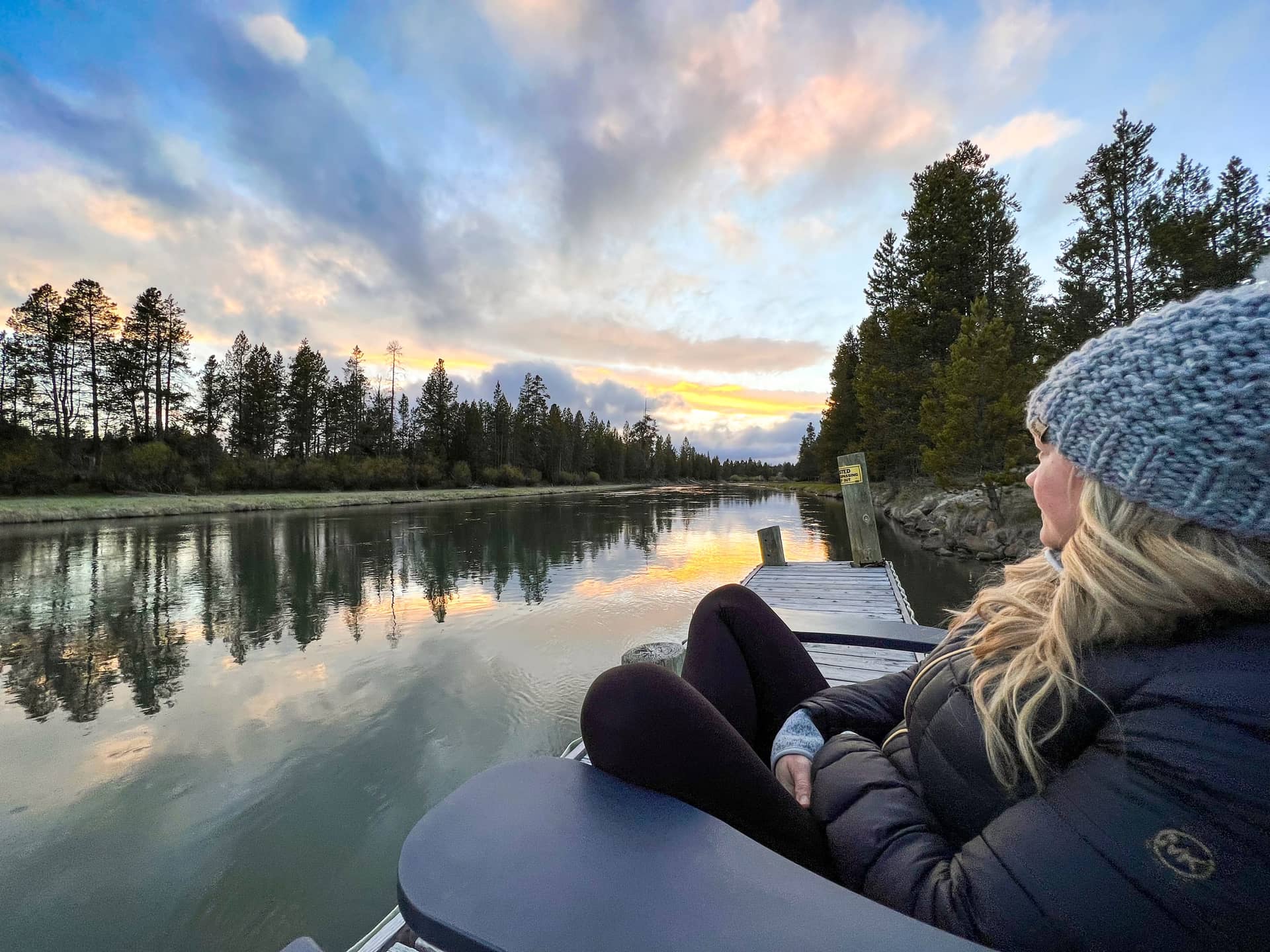
Sunriver became Oregon's first International Dark Sky Place in August 2020, one of 142 worldwide then. For a group of up to 30, the best seat is a private dock on 450 feet of Deschutes River frontage, at the end of a dead-end dirt road next door in Three Rivers. For telescopes, the Oregon Observatory in Sunriver and Pine Mountain Observatory southeast of Bend are the two stops.
Updated October 2026 · First published October 2026
Sunriver is Oregon's first International Dark Sky Place
Sunriver holds the International Dark-Sky Association's designation as a Dark Sky Friendly Development of Distinction, announced August 3, 2020. It was the first International Dark Sky Place in Oregon and one of 142 worldwide at the time; SROA now puts the count at fewer than 150. The community covers about five square miles, is surrounded by the Deschutes National Forest, and keeps few street lights. The Sunriver Nature Center and Observatory and the Oregon chapter of the IDA led the effort, with observatory manager Bob Grossfeld at the front.
The designation comes with rules. SROA has lighting restrictions for residential and commercial properties, and all exterior lighting on a Sunriver home must be pre-approved by its Community Development Department before installation. The designation covers Sunriver itself. The house sits in the Three Rivers area next door, under the same high-desert sky, and that geography is in Three Rivers, Oregon.
The Oregon Observatory at the Sunriver Nature Center: telescopes by night
The Oregon Observatory at the Sunriver Nature Center, 57245 River Road, is the telescope stop in Sunriver, next door to the Three Rivers area. Nighttime observatory hours vary by season, and the events calendar lists the dates; tickets and reservations go through observatory@snco.org. Daytime nature center and solar-viewing hours change by season too, so check snco.org before you drive over.
The calendar lists a one-hour nighttime visit and an in-depth nighttime visit; check snco.org/events for prices and book ahead for a group of 30. The observatory publishes a monthly Night Sky News post, which is the easiest way to know what is up the week you arrive. The daytime side, raptors and the botanic garden, is in things to do in Sunriver.
Pine Mountain Observatory: the University of Oregon's telescopes southeast of Bend
Pine Mountain Observatory is the University of Oregon's observatory, about 34 miles southeast of Bend at 6,300 feet. Select Friday and Saturday nights from late May through September are public viewing nights. Arrive after sunset but not after 10 p.m.; the greeting center usually closes by 10, the telescopes by 11 or earlier, and the 24-inch stays open until midnight on clear, moonless nights. A $5 donation per person is suggested.
Groups can book a tour on a non-public night. Group tours cost $125 for the first 20 people and $5 per person after that. The 24-inch telescope is the main visual instrument; the 32-inch is out of service, and a robotic 14-inch is research only.
The drive is Highway 20 east from Bend toward Burns for about 26 miles, then 8 miles south on a dirt road, about an hour from Bend, which is about 30 minutes from the house. There is usually no food or water service on site and the nearest services are in Bend, so bring fuel, food, and water. Confirm current dates at pmo.uoregon.edu before you go.
Milky Way season over the Deschutes: July to early August
The Milky Way's bright core is best seen around midnight through July and into early August, when the sky is darkest. The core sits in Sagittarius, by the Teapot asterism, with the band running through Scorpius, Ophiuchus, Serpens, and Scutum and up to Cygnus. From mid-northern latitudes the core sits low in the south, so you need a low, open southern horizon.
At the house the open horizon is the river. The dock sits on 450 feet of frontage with protected river habitat across the water. Keep phones in pockets so your eyes can adjust. Nights in Sunriver average 41 degrees in July by NOAA normals, so bring the fleece you packed for the dock.
The Perseids in August and the moon phases that matter near Sunriver
The Perseid meteor shower peaks around August 12 to 13 every year, with up to 100 meteors an hour under a dark sky. The moon decides how many you see: with a near-new moon at the peak, as in 2026, the fainter meteors show, and in a bright-moon year they vanish.
The moon matters on every other night too. A bright moon in the southern sky washes out the Milky Way core, so aim for the week around new moon for the core and the week around full moon for a bright walk to the dock without a flashlight. Check the phase for your dates before you pick the stargazing night of the week.
| What | When | Where to look from the house |
|---|---|---|
| Milky Way core | July to early August, around midnight | South, low over the river from the dock |
| Perseid meteors | Peak around August 12 to 13 each year; check the moon phase | Anywhere overhead; lie on the dock or the lawn |
| Oregon Observatory night visits | Hours vary by season; reserve through the calendar | 57245 River Road, Sunriver |
| Pine Mountain public nights | Select Friday and Saturday nights, late May to September; arrive before 10 p.m. | About 34 miles southeast of Bend |
Stargazing from the dock and deck after quiet hours: how a group of 30 does it
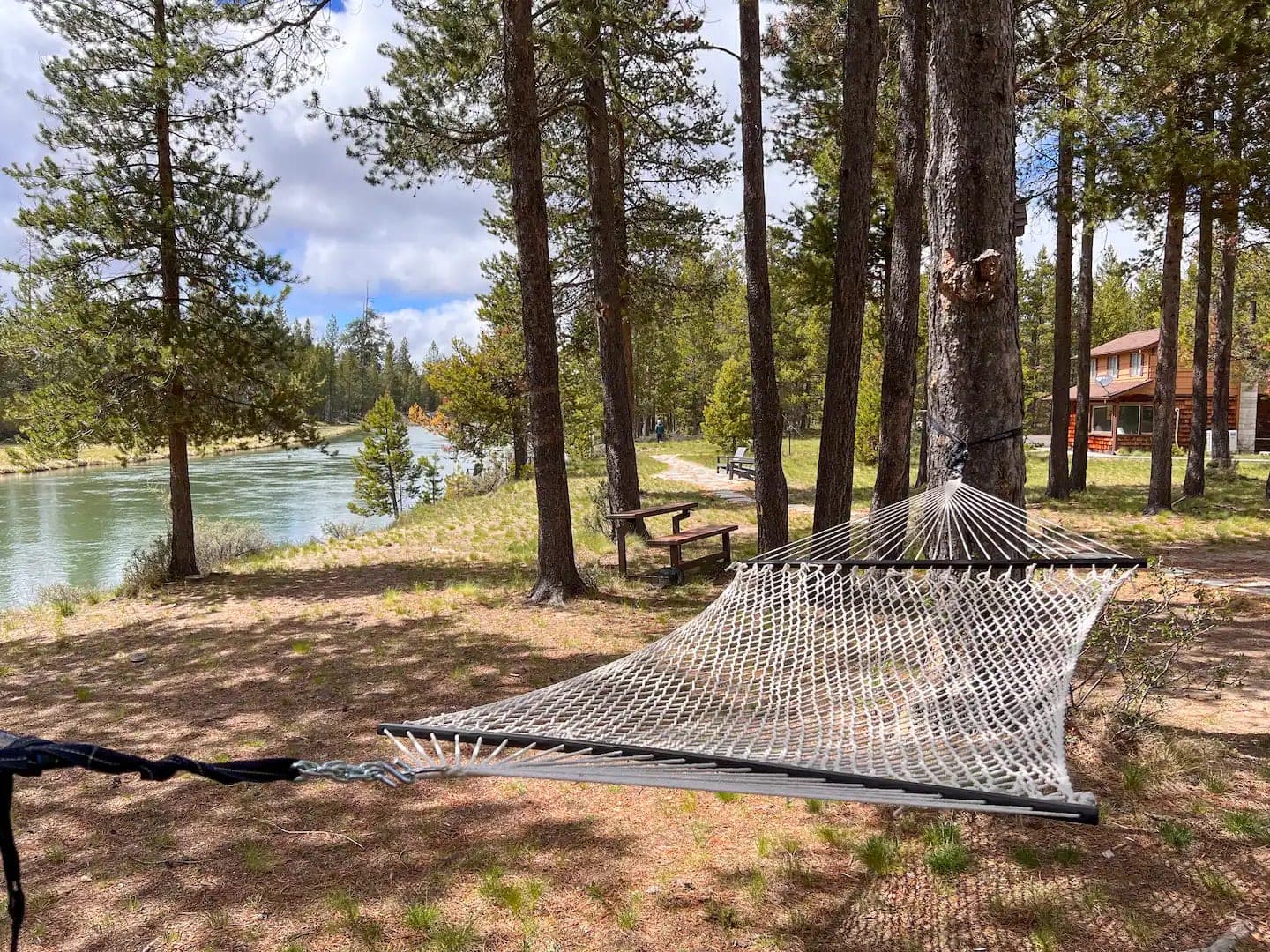
Stargazing is the one group activity that fits inside quiet hours. Quiet hours at the house run 9 PM to 8 AM, and they apply to noise. A group lying on the dock looking up makes almost none. The dock has Adirondack chairs, a hammock hangs between the pines by the water, and the wrap-around covered deck has sturdy tables and chairs for the people who want a railing.
The property sits at the end of a dead-end private road, Chief Paulina Drive, a shared dirt road with families and pets, with 80 acres of trees on one side and the river on the other. Exterior security cameras cover the driveway and front door only. There are no fires June through September, and there are no candles or open flames, so there is no light on the dock except what you bring.
The covered hot tub on the deck is another place to watch from, and the two living areas with stone fireplaces are there when you get cold. A review from an August group lists jumping in the river, watching the stars, and great meals as the trip. Dress for lows near 41 degrees in July and 34 in September.
Where to eat near Sunriver before a late night on the dock
Eat early and eat near the house on an observatory night. Sunriver Brewing Co. is the local brewery and pub for big tables and burgers, Blondie's Pizza the easy group dinner, and Josie K's Deli + Kitchen the grab-and-go for a Pine Mountain picnic. Hot Lava Bakery is the coffee and pastries stop to start the day. Make reservations for larger groups on summer weekends; the full list is in where to eat near Sunriver.
Where to stay near Sunriver for a dark-sky week with a large group
Stay at Deschutes Riverfront Retreat: one riverfront property near Sunriver with 11 bedrooms across two buildings for up to 30, ten minutes from the resort and about 30 from Bend. The live calendar is on Book Now, and the rules that matter for a group are on house rules.
What groups said about the nights
“We had such an amazing trip to Sunriver. The time we spent at the house together was very special. Jumping in the river, watching the stars, enjoying great meals and even playing some Oregon Trail/Clue.
We would be grateful if Scott had us back again someday.”
“This was a magical location, we absolutely loved our coffee on the dock in the morning and the gorgeous sunsets along the river at night. We hope to be back, it was perfect for our staff retreat.”
Sources checked for this guide (8)
- DarkSky International: Sunriver, first International Dark Sky Place in Oregon
- Sunriver Owners Association: Sunriver Dark Sky
- Sunriver Nature Center and Observatory: Oregon Observatory
- Sunriver Nature Center and Observatory: Night Sky News
- University of Oregon Pine Mountain Observatory: Visitor information
- NASA Night Sky Network: Perseid meteor shower
- Astronomy magazine: Now is the best time to see the summer Milky Way
- Wikipedia: Sunriver, Oregon (NOAA 1991 to 2020 climate normals)